When an engine quits on a Saturday morning, almost everyone does the same thing: they pull out their phone and search. The mechanics who show up in those results get the call. The ones who don't can be excellent at their jobs and still never hear about the customer who needed them.
Many independent marine mechanics in the Lowcountry have built their business on word of mouth and Facebook groups. That works, until the person asking is new to the area, or doesn't know who to ask. We've been changing that on DockWrench, and this post explains how, in plain terms, for both sides of the marketplace.
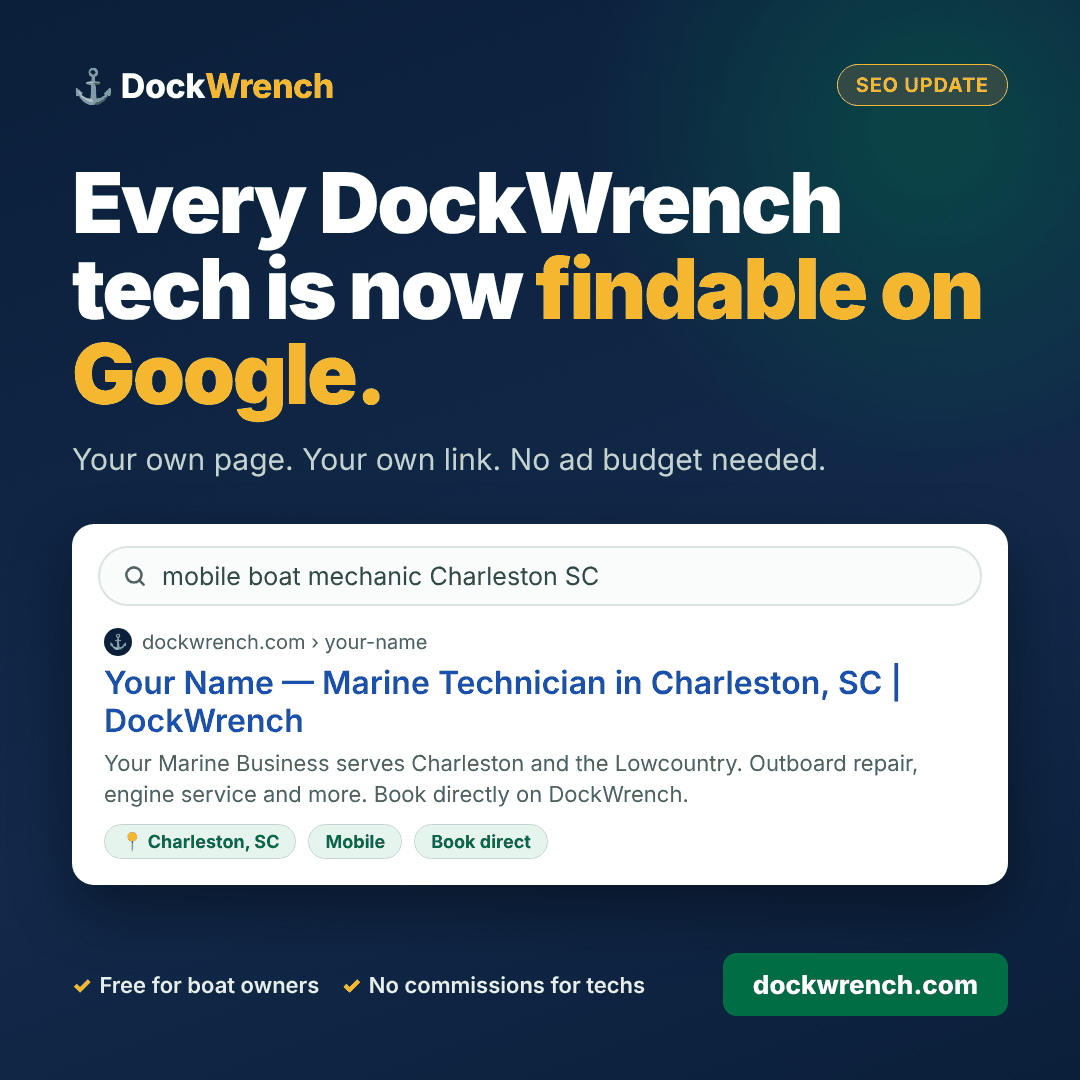
What "SEO" actually means
SEO stands for search engine optimization. The idea is simple: make it easy for Google and other search engines to find a page, read it, and understand who it's for. If a search engine can't do all three, the page doesn't show up, no matter how good the business behind it is.
What we changed on DockWrench
- Every technician has their own page. Each profile has its own address, such as dockwrench.com/tony-caristi.html, with the technician's name, business, service area and specialties, plus a link to book directly.
- Pages are written so search engines can read them. Our technician directory used to load only after the page opened in a browser, which some crawlers never see. The listings are now in the page itself.
- We label the information. Behind the scenes, each page tells search engines what it is: a local marine business, where it works, and what it offers. That helps both Google and AI assistants answer questions like "who fixes outboards near Mount Pleasant?"
- New technicians are added automatically. When a mechanic signs up, their page is generated and added to our sitemap, which is the list we give search engines of pages to visit.
- Logos. Technicians can upload their own logo from the dashboard so their listing looks like their business.
SEO is slow. New pages can take days to weeks to be discovered, and where they rank depends on many things we don't control. We're giving every technician a real foundation, not promising a position on page one.
For boat owners: how to use it
Searching online for a mechanic is only half the job. Once you find a few names, these steps help you pick well:
- Search for the service plus your area. "Outboard repair James Island" will usually beat "boat mechanic."
- Check the service area. Mobile techs only travel so far. Make sure your marina or dock is on their list.
- Match the engine. Yamaha, Mercury, MerCruiser and others each have their own quirks. Ask whether they work on your brand regularly.
- Ask about certifications and insurance directly. Reasonable mechanics are used to the question and will answer it.
- Get the scope and price in writing before work starts. Our Charleston repair cost guide shows what common jobs usually run.
On DockWrench, finding and booking a technician is always free for boat owners.
For mechanics: getting the most from your page
Your profile is built from what you tell us, so the details matter:
- Name the towns you serve. "Mount Pleasant, Daniel Island, James Island" is far more useful to a searcher, and to a search engine, than "Charleston area."
- Write a real bio. Say what you fix, which engine brands you work on, and how long you've been doing it.
- List every specialty you want to be found for, such as outboard repair, electrical, or winterization.
- Add your logo and keep your phone number current. A complete listing looks like a real business, because it is one.
- Collect reviews from happy customers. Ask them to review you on your own Google Business Profile too. Google reviews carry a lot of weight in local search.
There's no commission on your jobs. Payment goes straight from the customer to you. Take a look at how other techs have set up their pages, like Cape Romain Marine or Miller's Marine, and then set up yours.
Common questions
Can I find a marine mechanic in Charleston on Google?
Yes. Search for the service and your area, such as "outboard repair Mount Pleasant SC" or "mobile boat mechanic Charleston," and look for technician pages that list the towns they serve and the engines they work on. Every technician on DockWrench has their own page with that information and a direct booking link.
Do marine mechanics need their own website to show up online?
Not necessarily. A complete, well-written profile page can do much of the job a small website would. On DockWrench, each technician automatically gets a standalone profile page with their business name, service area, specialties and a booking link, at no cost and with no commission on jobs.
How long does it take for a new profile page to show up on Google?
It varies. Search engines have to discover and process a new page, which can take days to weeks, and where it ranks depends on many factors. A complete profile helps, but no one can promise a specific ranking or timeline.
Boat owners can browse Charleston marine technicians for free. Mechanics can list their business and get their own page.
Find a Marine Tech → List Your Business →